Why visit My Son
Why visit My Son
The heart of a lost kingdom
For close to a thousand years — from the 4th to the 13th century — this valley was the spiritual centre of Champa, an Indianised Hindu kingdom that once ruled central Vietnam. Its kings built and rebuilt temple after temple here to the god Shiva, worshipped locally as Bhadreshvara, and were laid to rest among them. Champa is long gone, but its red-brick towers still stand in the trees.
Brick that no one can quite explain
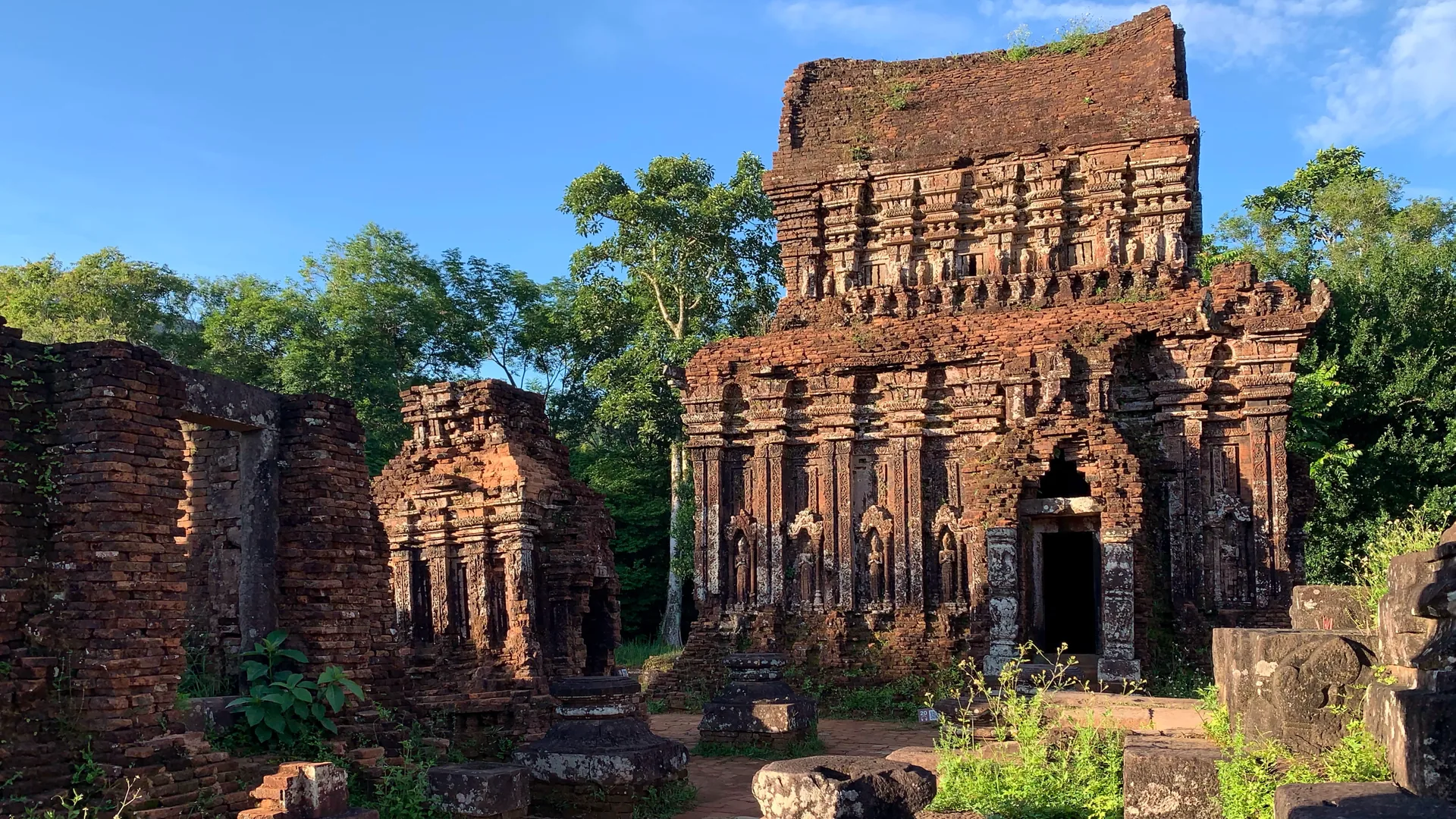
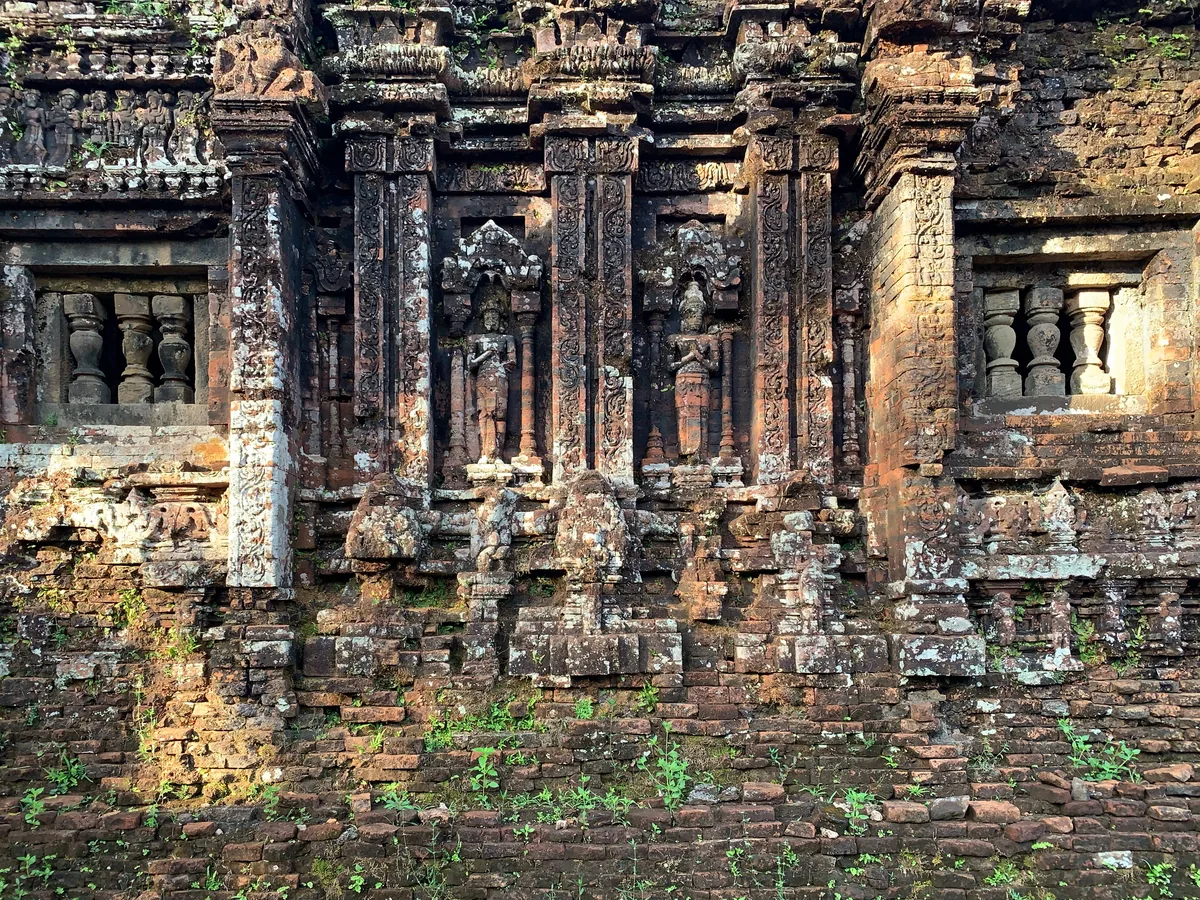
The Cham built almost everything at My Son in red brick — and carved their intricate ornament directly into the brick face, not into inserted stone. To this day scholars aren't certain how they fired the brick, bound it without visible mortar, or cut such crisp detail. It's a genuinely mysterious craft, and up close the carving is extraordinary.
Beauty and scars together
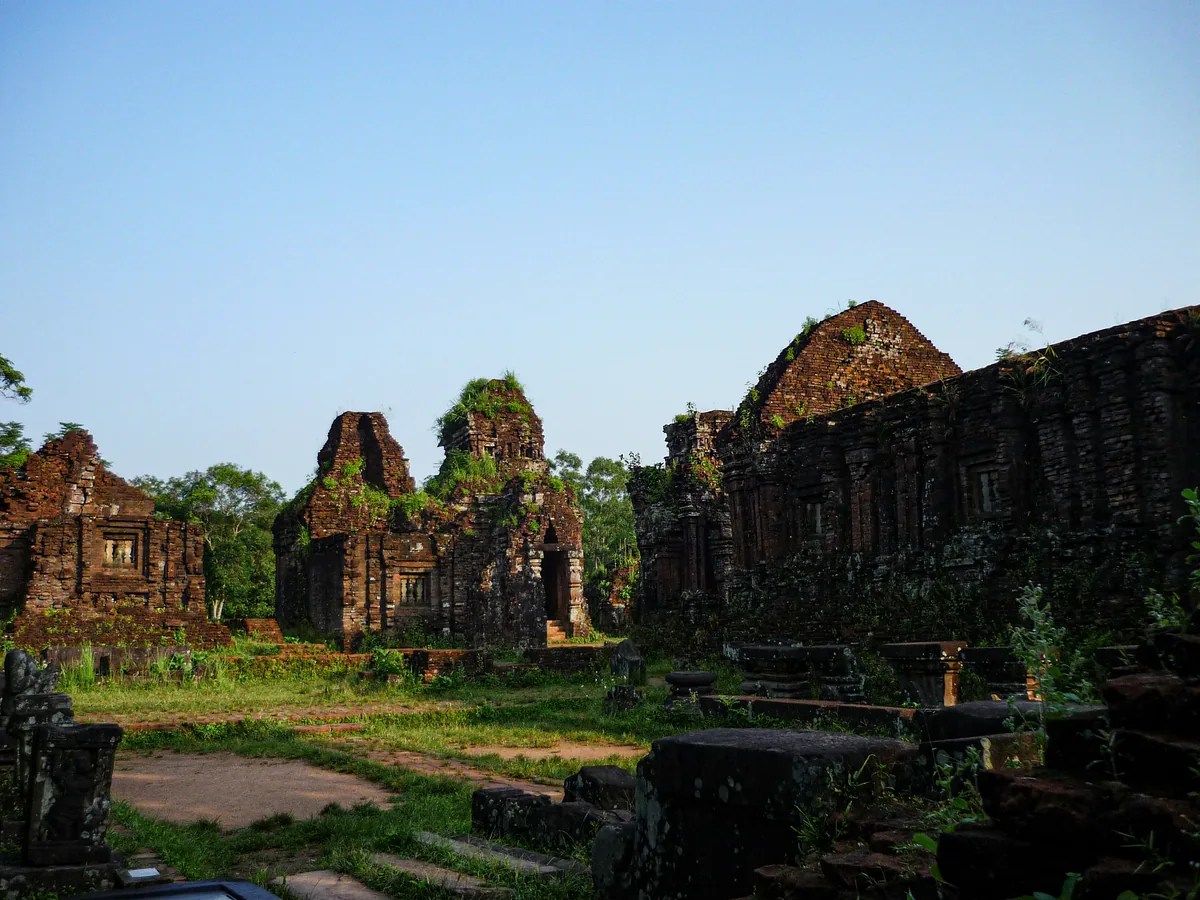
My Son is often mentioned alongside Angkor Wat and Borobudur — but a week of US bombing in 1969 destroyed much of it, including the masterpiece tower A1. What remains is a moving mix of standing towers, carved fragments and bomb craters in a quiet green valley: atmospheric ruins rather than a restored monument, which is exactly its appeal.
What to see at My Son
What to see at My Son
My Son is a walk through a compact valley of temple groups, each labelled with a letter by the French scholars who mapped it. Here's what stands out.
- Towers
The brick kalan
The classic Cham structure is the kalan — a brick sanctuary tower that once housed a deity. Several survive around the site, their walls carved with dancers, deities and floral bands cut straight into the brick.
- Group B–D
The best-preserved cluster
The central B, C and D groups are the most intact and the highlight of a visit — including the elegant "storehouse" B5, whose distinctive boat- or saddle-shaped roof is the finest surviving example of its kind.
- The lingam
Shiva & the steles
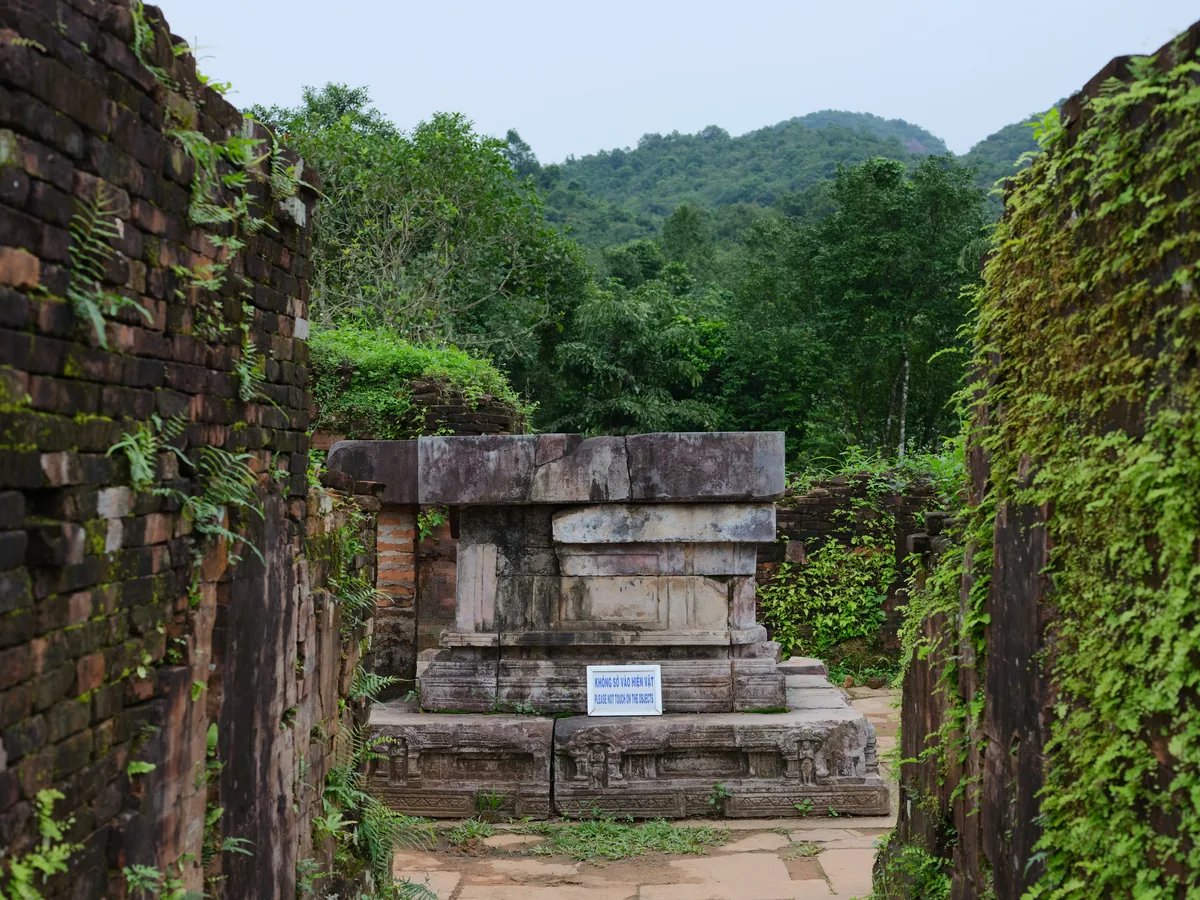
At the heart of Cham worship was the lingam of Shiva as Bhadreshvara. Carved lingam-yoni pedestals remain in place, and the site once held dozens of stone steles inscribed in Sanskrit and Cham that tell the kingdom's story.
- Craters
The marks of war
Bomb craters still pock the valley and shells are displayed among the ruins — a sobering, honest part of the visit, and a reminder of how much was lost in a single week of 1969.
- Dance
Cham dance & music
Near the entrance a small pavilion stages short performances of Cham traditional dance and music — the apsara-style dancing that once honoured the temples — included with many of the morning tours.
- Valley
The jungle setting
Ringed by two forested mountain ranges and threaded by a stream, the valley itself is half the experience — green, quiet and atmospheric, especially in the cool of early morning before the crowds arrive.
Getting there & planning
Getting there & planning
Most visitors reach My Son on a half-day trip from Hoi An or Da Nang — here's how it works.
An hour from Hoi An
My Son sits about 36 km southwest of Hoi An (roughly an hour by road) and around 68 km from central Da Nang. There's no town at the site itself, so nearly everyone comes on a tour or a private transfer rather than independently.
Go at dawn
The single best decision is to go early. The valley is small and shadeless in places, and by mid-morning it's hot and busy with coach groups. The early-morning tours reach the ruins around sunrise, when it's cool, quiet and beautifully lit — well worth the early start.
Tour, boat return, or just a ticket
Options range from a simple entry ticket to guided early-morning tours that add hotel pickup, a Cham dance show, breakfast, and — a lovely touch — a scenic boat ride back toward Hoi An along the Thu Bồn river. Choose the level of hand-holding you want when you book.
On site
Expect a walk of a kilometre or so on uneven ground between the temple groups (electric buggies cover part of it). Wear sturdy shoes and sun protection, bring water, and — because it's an active heritage and former conflict site — stay on the marked paths.
My Son & central Vietnam, in pictures
My Son & central Vietnam, in pictures
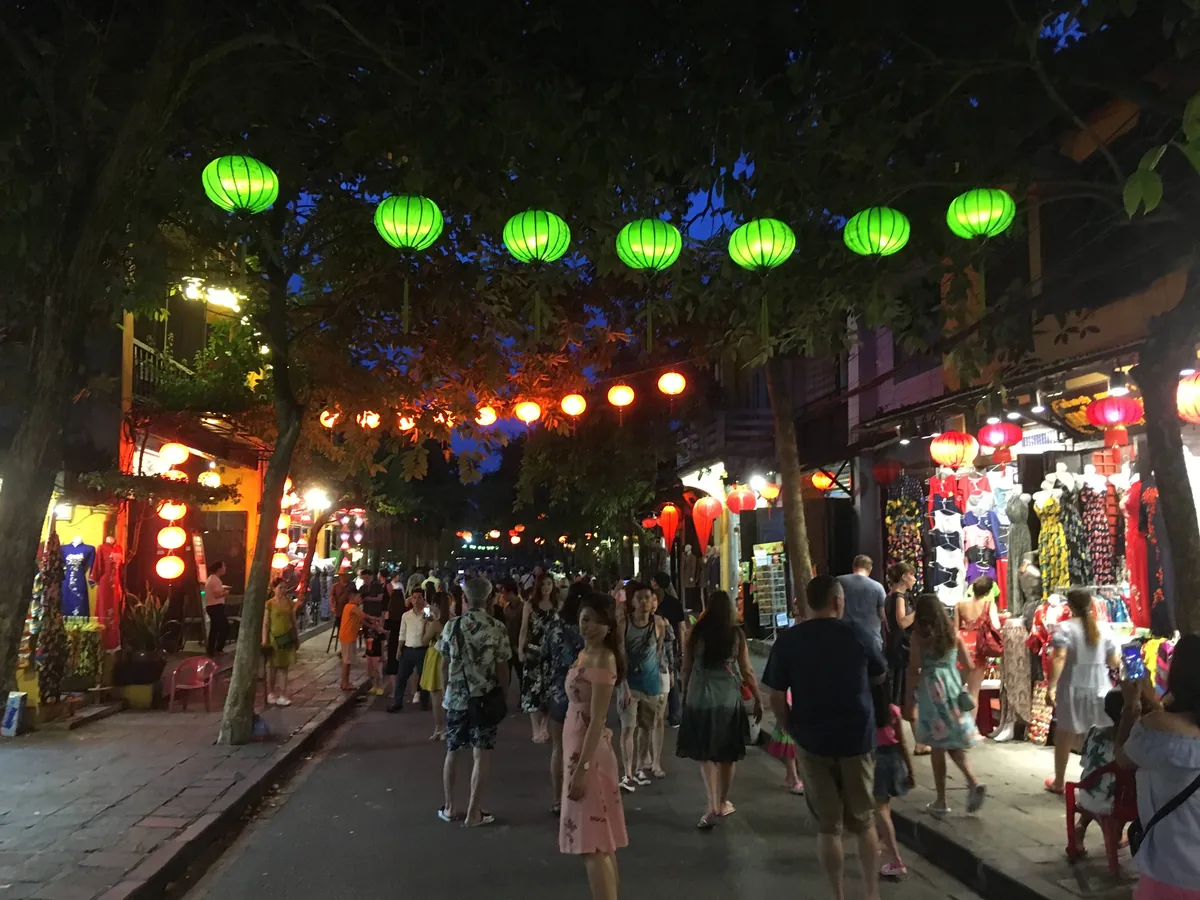
The temple towers, carvings and valley of My Son, and the Hoi An country around it.
Tickets & tour options
Tickets & tour options
| Option | What it includes | Good to know |
|---|---|---|
| Entry ticket | Admission to the sanctuary and its museum | Cheapest option if you arrange your own transport |
| Early-morning tour | Pickup, guide, Cham dance show, often breakfast | The popular choice — beats the heat and crowds |
| Tour with boat return | Adds a scenic river boat ride back toward Hoi An | A relaxed, scenic way to end the morning |
| Combined day trips | My Son paired with Marble Mountains or the Golden Bridge | Efficient if you're short on days in the area |
Ways to visit My Son
Find a My Son tour or ticket for your trip
Every option below is bookable through GetYourGuide, with live availability and the final price shown in your own currency before you pay.
Planning your visit
Planning your visit
Choose your option
Decide first between a simple entry ticket (if you have your own transport) and a guided tour from Hoi An or Da Nang. The early-morning guided tours are the most popular for good reason — they handle the transfer, add context you'd otherwise miss, and get you there before the heat and the crowds.
Go early
Whatever you book, aim for the earliest slot you can. My Son at dawn — cool, misty and near-empty — is a completely different experience to My Son at 11am in full sun with a dozen coaches in the car park. The early starts are worth it, and they sell out first.
Consider the boat return
Several tours end with a gentle boat ride back down the Thu Bồn river toward Hoi An, often with a stop at a craft village. It turns a temple visit into a rounded half-day and is a scenic, low-effort way to travel back.
What to bring & know
Wear sturdy shoes for uneven ground, bring sun protection and water, and dress respectfully for a sacred site. Keep to the marked paths — the valley still holds unexploded ordnance from the war beyond the cleared areas. Allow around half a day in total.
Booking flexibility
The listings offer free cancellation up to 24 hours before and, on many options, reserve-now-pay-later — so you can lock in an early-morning slot without paying today and still adjust if your central-Vietnam plans change.
Planning a My Son day from Hoi An
Planning a My Son day from Hoi An
GEO/FAQ
My Son Sanctuary questions
What is My Son Sanctuary?
My Son is a cluster of ruined Hindu temples in a jungle valley of central Vietnam, built in red brick between the 4th and 13th centuries by the kings of Champa, an Indianised civilisation that once ruled the region. The temples honour the god Shiva, worshipped locally as Bhadreshvara. It has been a UNESCO World Heritage Site since 1999 and is often compared to Angkor Wat and Borobudur, though on an intimate, ruined scale.
How do I get there from Hoi An or Da Nang?
My Son is about 36 km (an hour) southwest of Hoi An and roughly 68 km from central Da Nang, with no town at the site, so almost everyone visits on a guided tour or private transfer rather than independently. Early-morning tours with hotel pickup are the most popular way to go; many end with a scenic boat ride back toward Hoi An.
Why is an early-morning visit recommended?
The valley is compact, partly shadeless, and gets hot and crowded with coach groups by mid-morning. Arriving around dawn means cooler air, soft light and far fewer people — a much better experience. It's why the early-morning slots are the most booked and sell out first.
What's the difference between a ticket and a tour?
A plain entry ticket just covers admission (and the site museum) — fine if you have your own transport. A guided tour adds hotel pickup and a guide, usually a short Cham dance performance, often breakfast, and sometimes a boat ride back toward Hoi An. Each option's inclusions and live price are shown in the booking widget.
How much is there to see, given it was bombed?
A week of US bombing in 1969 destroyed much of the site, including the great tower A1, so My Son is genuine ruins rather than a restored monument. But the central B–C–D group survives well, the brick carving is remarkable up close, and the setting is beautiful. Set your expectations for atmospheric ruins in a jungle valley — that honesty is part of the appeal.
Is there anything to know before booking?
Wear sturdy shoes and sun protection, bring water, dress respectfully, and stay on marked paths (the wider valley still holds wartime unexploded ordnance). Allow about half a day. The listings offer free cancellation up to 24 hours before and, on many options, reserve-now-pay-later, so you can hold an early slot without paying today.
Still deciding early-morning tour or your own ticket?
Leave your email and roughly when you're travelling — we'll send a short rundown of how the early-morning tours, boat-return trips and entry-only tickets compare from Hoi An and Da Nang.